Hack#1- Haunted by the lovely memories of my grandma

Grandma

This is a picture of my grandma. Even though she died 10 years ago, she taught me so many things and I wouldn’t be the person I am today without her. She was the most generous, affectionate and amazing grandma I could have ever imagined. I am grateful that she taught me how to live life to the fullest. I still think about her every single day and she is still a part of my life. I am haunted by the lovely memories of my grandma.

JB

Hack #1

During one of Blum's lectures, he discussed how everything in our lives has a history. Digital diversities and democracies advanced with the help of learner response systems. "Active learning" in large classroom were possible with multiple choice and short answer questions. The "I" clicker is an example of everyday technology that is used throughout SDSU campus, that has surfaced because of history. The "I" clicker allows learning to be democratized and individualized.

During one of Blum’s lectures, he discussed how everything in our lives has a history. Digital diversities and democracies advanced with the help of learner response systems. “Active learning” in large classroom were possible with multiple choice and short answer questions. The “I” clicker is an example of everyday technology that is used throughout SDSU campus, that has surfaced because of history. The “I” clicker allows learning to be democratized and individualized.

Hack #1

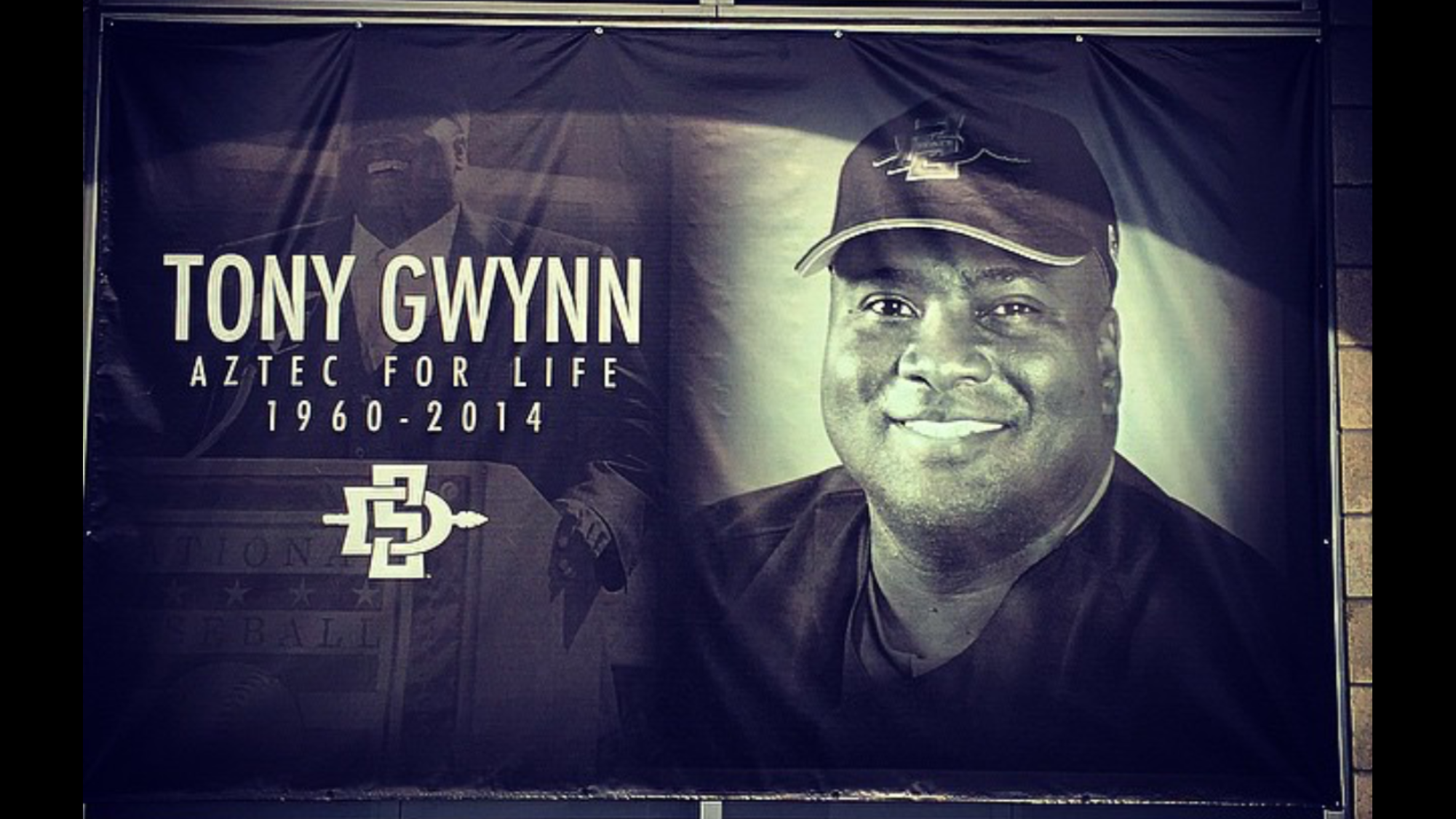
As I walk to baseball everyday I look at the same banner. This banner is a dedication to Hall of Fame Player and SDSU head coach Tony Gwynn. This banner shows the date of his birth and his death. He is a legendary baseball player and coach. We miss him dearly and may he Rest In Peace.

IMG_5141

Hack #2 — “Little Boxes”

The song, “Little Boxes”, originally performed by Malvina Reynolds, was written as a commentary on the monotony of 1950’s cookie cutter suburban neighborhoods. When I was wandering the city immediately around campus one night, it was dark, and I found myself having to pay close attention so as not to get lost in the never-ending array of seemingly identical houses and neighborhoods. The experience reminded me of this song and all that it represents. I’ve included my personal favorite version of the song as sung by “Walk off the Earth”.

https://www.youtube.com/watch?v=LM8JhvfoqdASDSU-San-Diego-State-University-College-Campus-Del-Cerro-Aerial-Photo_IMG_0805_uxga

(This is the sky view of the somewhat “cookie cutter” neighborhood surrounding SDSU, as well as the campus itself.)

Hack #1

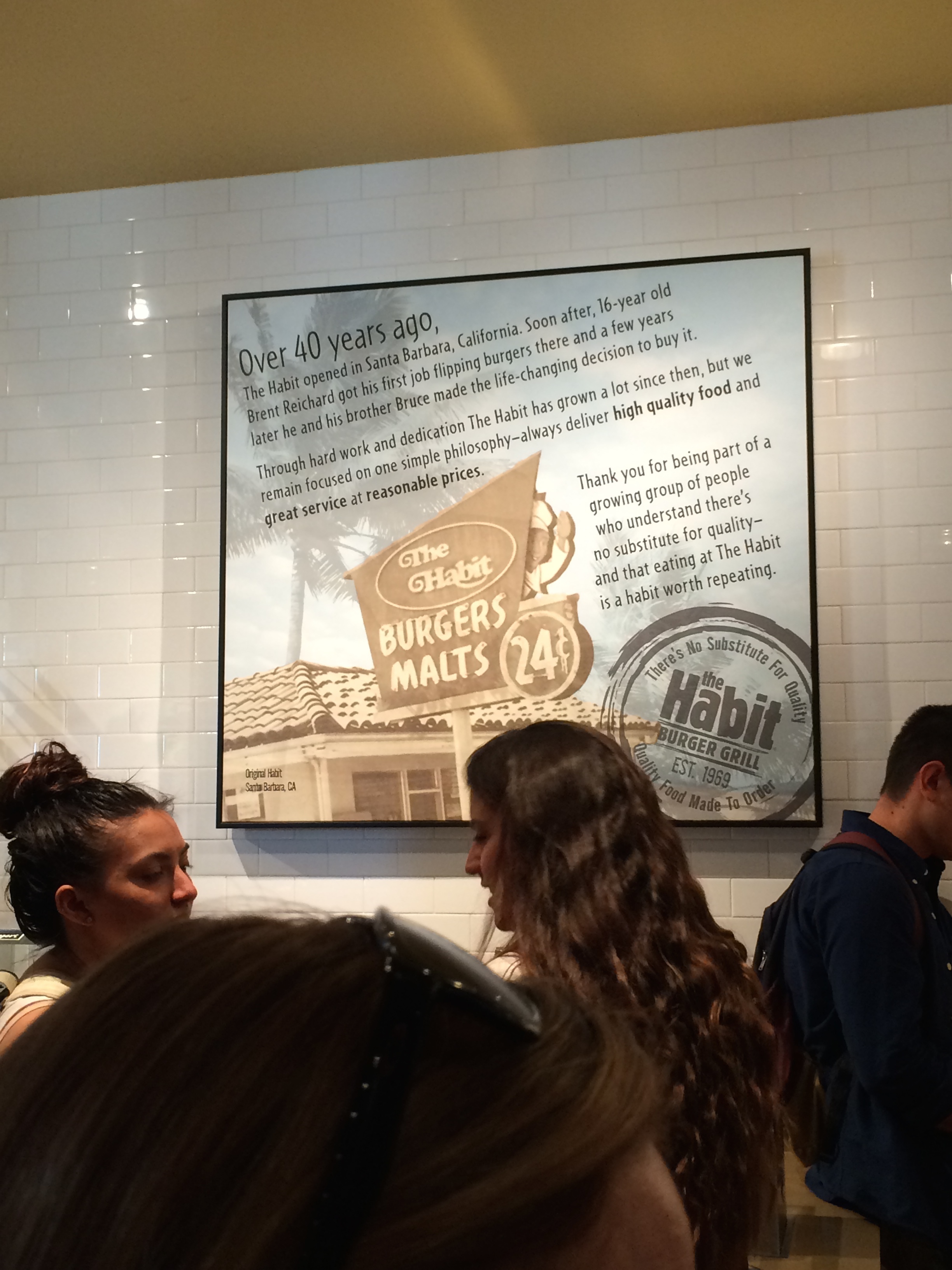
The first week of lecture Professor Blum was constantly talking about how history is all around us, or better yet, how we are “haunted by history.” I was at The Habit for lunch and saw this sign that literally described the history of the restaurant I was in. This is a perfect example of how we are living in parts of history every day without even knowing it. This restaurant didn’t just appear out of thin air, but was carefully planned in the past and has evolved into what it is today. Although it is different from the first Habit, it has the same premise that was put into place over 40 years ago.

hack

Hack #1

IMG_0743 IMG_0745

“If it were not for this dead lady,  women would not be writing books about other women, or have a say in society.” I hacked a bibliography of Elizabeth Cady Stanton that was co-written by both a man and woman. About 150 years later a book was published glorifying a feminist fighting for what she thought was necessary even when no one was at her side. Without Stanton and her fight for women’s rights in the 1860’s, the 19th Amendment would never have been ratified. If the 19th Amendment was never ratified, who knows what our nation would be based upon today. Elizabeth Cady Stanton jump-started the feminist movement in the 1800’s, and us females have her to thank for taking charge against authority back when that was unheard of.

DQ 3

Group 4 answer

Vietnam being called a mistake cause cynicism and public suspicion because the propoganda leading up to the war was so convincing, that for main media to go back on that, the U.S. Public was caught holding two contradicting beliefs.

These two beliefs were a) it was just for the U.S. to send troops into Vietnam and now b) it was a mistake to send u.s. Troops into Vietnam. This was hard for the public to accept because if they were to go back on what they were told before, what’s stopping them from going back on what they were saying now?

Paplov’s Theory in The Office (Hack #1)

A few classes ago, Professor Blum mentioned Pavlov’s theory which immediately made me think of this episode of The Office. Russian psychologist Ivan Pavlov noticed that every time he walked in the room to feed his dogs they would salivate, demonstrating that something that is associated with the event of them being fed triggered the same physical response from them. He took this even further as he conducted an experiment in which he rang a bell every time he gave the dogs food, and found that the dog began to salivate at the ring of the bell. In this clip, Jim conducts the same experiment but replaces the dogs with Dwight, the bell with the sound of his computer starting up, and food with an Altoid mint.

Hack #1: Testing History

On February 2nd, Professor Blum lectured about the Progressive Age, a time of societal progression including the establishment of organizations and institutions in order to prepare for career fields such as law and medical.  Specifically, during this time period, the rise of colleges was imminent and in 1901, the College Examination Board was established.  This board would go to find the first standardized test, the Scholastic Aptitude Test (SAT) in 1926.

About a week later, as I was sitting in Stats 119 A, the teaching assistant began to talk about the difference in score value from when the SAT was first administered to the value today (we later found the z-scores for two scores given and found that an the first SAT had more value for a certain score).  This got me thinking and since I had learned how the SAT was founded, I started wondering what the history of the evolution of the SAT was.

According to Petersons.com (2014), the SAT at first was a spin-off of the Army Alpha, which was the IQ test given to recruits to test their IQ.  Overall, the SAT has changed in the way it has been administered (time wise) and the way it is divided.  When first administered, the SAT was mainly a 315 question mathematical based standardized test with some language questions mixed in and had a 97 minute time limit.  Since then, the language questions have been growing to the point where to scoring scale was 1600 and then the essay was added in 2005 with a scoring scale of 2400.

As Professor Blum said himself: “We are haunted by history”.  There is a history to everything, even a pre-college aptitude test.

Hack #1

YG showed up in LA this past weekend for as a guest for a show. He started breaking down some song lyrics, specifically “I call my homies not 911” means that YG doesn’t call the cops when he is in a pinch, because they won’t help him out, but his homies will. This shows the ongoing struggle between the black community and police officers

Yg (blue shirt) at the Palladium in Hollywood, CA

Yg (blue shirt) at the Palladium in Hollywood, CA